Bus 201 Portugal München: A Unique Font for Creative Projects
Bus 201 Portugal München is a distinctive free font that has gained attention among designers, developers, and creatives. Originally part of the Walk the Web art project in Munich, this typeface offers a fresh and dynamic approach to typography. Its origins in an interactive public art initiative add an element of cultural and artistic significance, making it more than just a functional tool for text formatting.
The font’s name suggests a connection to both Portuguese and German influences, which may reflect its design philosophy. While the exact details of its creation remain somewhat abstract, the result is a versatile typeface that can enhance a variety of visual projects. Whether used in print, digital media, or web applications, Bus 201 Portugal München brings a sense of energy and modernity to any composition.
Key Characteristics and Design Features
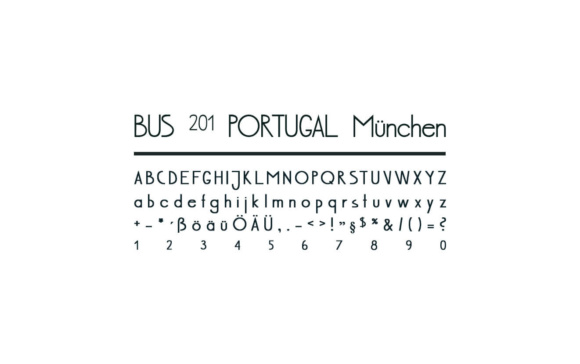
Bus 201 Portugal München is characterized by its clean lines, balanced proportions, and subtle variations in stroke weight. These features contribute to a professional yet expressive appearance, making it suitable for both headings and body text. The font maintains a high level of legibility across different sizes and formats, ensuring that it remains readable even in smaller point sizes or on low-resolution screens.
One of the standout aspects of this font is its adaptability. It works well in a range of contexts, from branding and editorial design to user interface elements and social media graphics. Its neutral yet distinctive style allows it to blend seamlessly with other fonts while still standing out when used as a primary typeface.
The font also includes a comprehensive character set, supporting multiple languages and special symbols. This makes it a practical choice for international projects or content that requires multilingual support. Additionally, its open-source nature means that users can freely modify and distribute it, provided they follow the licensing terms.
Purpose and Practical Value
Bus 201 Portugal München was developed as part of an experimental art project, which gives it a unique position in the world of typography. Unlike many commercial fonts, it was not created with a specific brand or product in mind. Instead, it emerged from a creative process that emphasized exploration and expression. This background makes it particularly appealing to artists, designers, and educators who are looking for unconventional tools to inspire their work.
For professionals in the design industry, the font offers a fresh alternative to more common typefaces. It can be used to create visually engaging presentations, websites, or marketing materials that differentiate a project from the competition. Its availability as a free resource also makes it an attractive option for freelancers and small businesses that want to maintain a high-quality visual identity without incurring additional costs.
In addition to its aesthetic appeal, Bus 201 Portugal München is easy to implement. It is compatible with most design software, including Adobe Creative Suite, Figma, and Canva. This accessibility ensures that users can integrate it into their workflow without technical hurdles or complicated setup processes.
Real-World Performance and Usability
When tested in various design scenarios, Bus 201 Portugal München performs consistently well. In headings, it adds a strong visual presence without overwhelming the surrounding content. In body text, it maintains clarity and readability, making it suitable for long-form writing or informational layouts.
One potential limitation is its lack of extensive stylistic variations. Unlike some popular fonts that offer bold, italic, and condensed versions, Bus 201 Portugal München appears to have a more limited set of weights and styles. This may restrict its use in certain design contexts where a broader range of typographic options is required.
However, this simplicity can also be seen as a strength. For projects that prioritize consistency and minimalism, the font’s straightforward design can be an asset. It encourages a cohesive visual language without the need for complex typographic hierarchies.
Who Benefits Most from Using Bus 201 Portugal München?
Bus 201 Portugal München is particularly well-suited for creatives who value originality and artistic expression. Freelancers, independent designers, and small business owners may find it useful for building unique brand identities or creating eye-catching marketing materials. Its free availability also makes it an ideal choice for students, educators, and hobbyists who are experimenting with typography and design principles.
For entrepreneurs and marketers, the font can be a valuable tool for crafting compelling content that stands out in a crowded digital space. Whether used in blog posts, social media visuals, or email campaigns, it provides a fresh and modern look that can enhance the overall presentation of a message.
Additionally, the font’s association with an art project adds a layer of storytelling that can be leveraged in creative campaigns. This makes it a good fit for projects that aim to connect with audiences on an emotional or cultural level.
Recommendations and Considerations
Before incorporating Bus 201 Portugal München into a project, it’s important to consider the specific needs of the design. If the goal is to create a highly customizable or multi-faceted typographic system, this font may not be the best choice. However, for projects that benefit from a clean, modern, and slightly unconventional typeface, it can be an excellent option.
Users should also verify the font’s licensing terms to ensure compliance with any distribution or commercial use requirements. While it is generally available for free, there may be restrictions on how it can be used in certain contexts.
Overall, Bus 201 Portugal München is a valuable addition to any designer’s toolkit. Its combination of aesthetic appeal, practical usability, and cultural significance makes it a compelling choice for a wide range of creative applications.